Gear Guides
Beaufort Scale for Kite Flyers: Which Wind Speed Suits Which Kite
A kite only cares about the air moving across your flying field right now. It has no interest in the forecast you read at breakfast, or the word "breezy" in the app. What matters is how hard the wind is pushing, how steadily it arrives, and whether it comes in smooth pulses or ragged shoves.
The Beaufort scale is the quickest way to put a number on that. Learn the handful of forces that matter for kiting and you will stop guessing which kite to unpack — and stop breaking things on the days you guess wrong.
The Beaufort Scale in Plain Terms
Admiral Beaufort's scale describes wind by its visible effect rather than by a number on a screen, which is exactly why it suits kite flyers. Force 0 means smoke rises vertically. Force 3 means leaves and small twigs are in constant motion. Force 5 means small trees sway and inland water starts to show whitecaps. Force 8 is a gale, and nobody is having fun.
The scale runs from 0 to 12, but kiting lives almost entirely between force 1 and force 6. Here are the bands, in the units most UK flyers use:
- Force 0 — calm: under 1 mph. Smoke rises straight up.
- Force 1 — light air: 1–3 mph. Smoke drifts; you can barely feel it.
- Force 2 — light breeze: 4–7 mph. Wind on your face, leaves rustle.
- Force 3 — gentle breeze: 8–12 mph. Leaves and twigs moving, flags flapping.
- Force 4 — moderate breeze: 13–18 mph. Dust and paper lift, small branches move.
- Force 5 — fresh breeze: 19–24 mph. Small trees sway, whitecaps appear.
- Force 6 — strong breeze: 25–31 mph. Large branches move, umbrellas become useless.
- Force 7 — near gale: 32–38 mph. Whole trees in motion; walking is hard work.
- Force 8 — gale: 39–46 mph. Twigs snap off. Pack the car.
Reading the Wind Before You Unpack
You do not need an anemometer, though a small handheld one is a genuinely useful thing to keep in your kite bag. A flag, a windsock, a line of poplars or the surface of a pond will all tell you roughly what you are dealing with. Get into the habit of a thirty-second survey:
- Stand still and feel the wind on your face for a count of ten. Steady pressure is good news; sudden slaps are not.
- Find the tallest thing you can see — a flag, a tree, a mast — and watch it for a full minute. Constant motion means a decent breeze. Long pauses followed by violent shakes mean gusts.
- Check the gust figure on your weather app, not just the average. A 12 mph average with 22 mph gusts is a completely different day from a steady 12 mph.
- Walk the field. Wind behaves differently at the far end near trees or buildings than it does in the middle.
Which Force Suits Which Kite
Kites vary enormously, but most fall into three broad families, and each has a comfortable band.
Force 0–1: the frustrating band
Single-line deltas and diamonds will not stay up in 2 mph unless they are very large and very light, or unless you keep moving backwards to create your own apparent wind. It can be done — big, lightweight single-liners and purpose-made zero-wind gliders are built for it — but it is fiddly work. If you have driven somewhere to fly, this is a day for a hill, a walk, or patience.
Force 2–3: the beginner's sweet spot
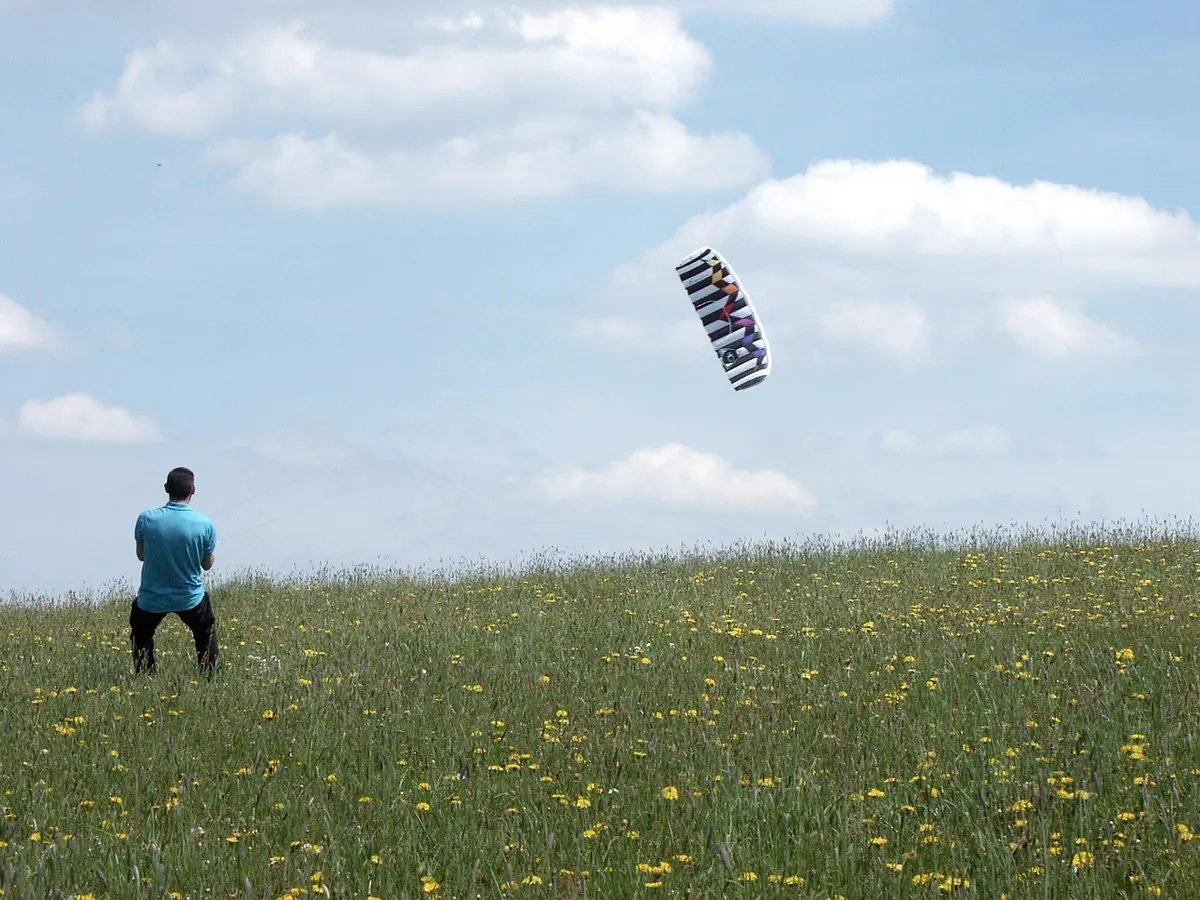
This is where kite flying becomes easy. A 4–7 mph breeze lifts almost any single-line delta or sled from the ground with a gentle tug, and 8–12 mph gives you a solid pull and a kite that sits high and steady. Framed two-line sport kites start to fly properly here too, especially at the top of the band. If you are teaching someone, aim for force 3: enough wind to fly without a run-up, not enough to drag a child across the grass.
Force 4–5: sport and power kite territory
At 13–18 mph, twin-line sport kites come alive — fast turns, clean corners, proper trick flying. Traction and power kites are also in their element, provided you have matched the canopy to the wind. Force 5 at 19–24 mph is serious: a full-size power kite in that much wind can lift you off your feet, and only experienced flyers should be out with small, depowerable kites and a clear plan.
Force 6 and above: keep it in the bag
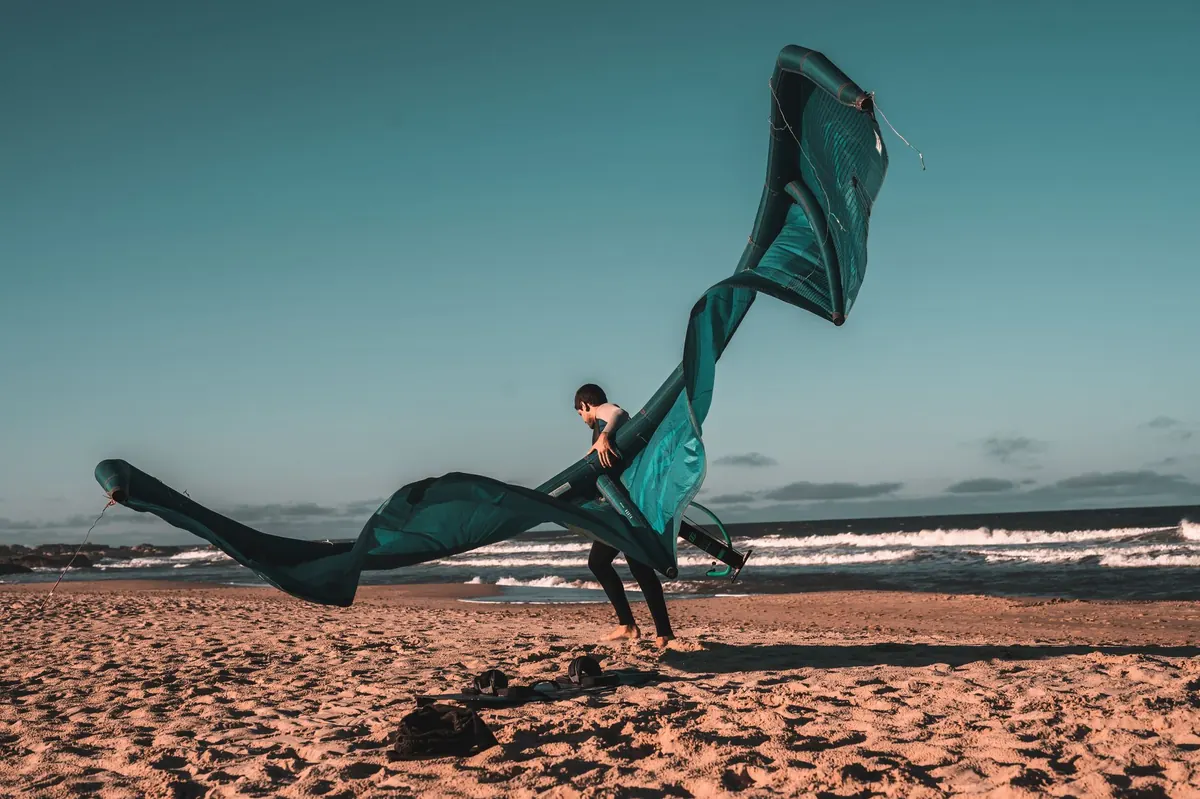
Above roughly 25 mph, almost every kite should stay packed. Inland, gusts at this strength arrive with no warning, and a kite that was manageable a second ago is suddenly heading for a car park. Very experienced riders on the coast sometimes fly small kites in force 6, but they are on clean, steady sea wind with a helmet on and an exit route planned.
Bigger Canopy, More Power
Two kites of the same design in different sizes behave like two different kites. The larger one pulls harder, needs less wind to launch and becomes unmanageable sooner. That is why a force 3 can feel lovely with one kite and terrifying with another.
The practical rule is simple: when the wind picks up, go down a size. Manufacturer wind range charts are a sensible starting point, but treat the top end of any chart as a figure for experienced flyers on smooth wind, not for your first session with that kite. If you find yourself constantly fighting the kite or leaning back to stay upright, you are over-canopied.
Gusts, Sea Breezes and Site Quirks
Average wind speed flatters almost every inland field. Trees, buildings, hedges and slopes create turbulence that can double the wind for two seconds and then drop it to nothing. The result is kites that lurch, collapse and relaunch unpredictably — the main reason beginners find inland flying harder than it looks.
Coastal wind is generally smoother and arrives off the sea with fewer obstacles, which is why beaches have such a reputation. A sea breeze often builds through the afternoon as the land warms, so a morning that is barely force 1 can become a pleasant force 3 by two o'clock. Hilltops accelerate the wind; the downwind side of a building or a line of trees is a wind shadow full of rotors. If a kite is behaving strangely in one spot, move twenty metres and try again.
Sites, Safety and Sensible Limits
Never fly near overhead power lines, roads, railways, airports, livestock or crowds — a trailing line can do real damage, and power kites can pull a person a long way. Check who owns the land and whether the site has rules; many clubs and popular flying sites ask for third-party insurance, so sort that out before you turn up with a traction kite. Gloves, a helmet for landboarding and buggying, and a clear understanding of how to kill the kite's power are not optional extras.
Set your own limit before you launch, not once you are already being dragged. Wind that makes you uneasy on the ground rarely improves once a kite is in the air.
Your Practical Wind Plan
Check the forecast the night before, then check the actual conditions when you arrive — they are often different. Feel the wind, watch a flag, look at the gust figure, and pick your kite from there rather than from habit. Carry one kite above and one below your usual choice so you can adjust as the day develops.
And remember that the Beaufort scale is a conversation with the sky, not a rulebook. Force 3 on a sheltered inland field with lumpy gusts can be harder work than force 4 on a clean beach. Learn to read both, and you will spend far more days flying and far fewer days untangling.
Photo: TheOtherKev / Pixabay