Flying Spots
Where to Fly a Kite in the UK: How to Find and Judge a Safe Field
A kite needs three things: wind, space, and nothing in the way of either. In the UK, finding all three at once is often the tricky part. The good field at the end of the lane has a pylon at one end and a footpath through the middle; the beach that looks perfect on a Tuesday is a dog-walking motorway by Sunday lunchtime. Judging a site is a skill, though, and it's one you can pick up in an afternoon. After that, you'll never look at open ground the same way again.
Look up before you look at anything else
Start with the sky. Overhead power lines are the classic kite hazard, and the risk isn't only to the kite. Lines can conduct, and a wet line in contact with a live cable is a serious situation. If you can see pylons, wooden poles with wires between them, a substation, or a railway line with its own electrified rails, walk on. There is always another field.
Airfields are the other hard stop, and they're easy to miss. It's not just the big regional airports. Gliding clubs, private strips with a single mown runway, farm airstrips, helicopter training areas and military low-flying routes all count. A kite line is effectively invisible from the air, and a pilot at low level has no chance to avoid it. If you spot a windsock, a hangar, a glider trailer or a neatly mown strip in an otherwise rough field, assume you're too close and ask locally before flying.
Then check what's under the kite's likely flight path and beyond it: busy roads, motorways, railway lines, and any spot where a line coming down would land on a carriageway or on someone's property.
Read the wind where you're standing, not where the kite is going
Wind at two metres is not the wind at thirty. Look for evidence at height: the tops of trees, long grass, a flag, smoke from a chimney, ripples crossing a pond. A slope facing the wind gives you smoother, stronger air; the lee side of it gives you nothing but swirl.
The single most common mistake at a new site is launching in the wind shadow of a hedge, a wood or a building. The air there looks calm and then arrives in sudden, direction-changing gusts that will flip a kite and drive it into the ground. Walk fifty metres upwind of the obstruction and feel the difference before you commit.
Give yourself a downwind run
You want clear space downwind, not because you plan to crash, but because that's where the kite goes when something goes wrong. A small delta on a light day is happy with a modest field. A large power kite, a stunt kite flown on long lines, or anything on a day with real strength in it needs far more room — a hedge thirty metres away is not enough. Err on the generous side and pick the corner of the field that gives you the longest run.
Check who else is using the space
Livestock are a genuine problem, not a charming detail. Cattle are curious and heavy, horses spook easily, and sheep will happily walk into a grounded line. A kite line across a field with animals in it is a tangle waiting to happen, and you're the one outside the fence. If animals are in the field, find another field.
Horses being ridden deserve particular care. Bring the kite down and walk it in, stand still, and let the rider pass. A kite suddenly lifting near a road-adjacent bridleway can end badly for everyone. The same goes for dogs off the lead, cyclists, cricket matches, model aircraft flyers and drone users. If a local kite club uses the site, they'll often know which end of the field is the sensible one and when the football pitches take over.
The ground under your feet
Flat, mown and free-draining is the ideal. Long grass hides trip hazards and snags lines; tussocks turn an ankle. Walk the area you intend to use and look for rabbit holes, broken glass, dog mess, buried stiles and old fence posts. Sand is forgiving to a crashing kite but grit gets into everything. Wet ground means mud, and mud means a kite you'll be cleaning for a week.
Permission matters too. Public parks, council-owned land, National Trust land, farmland and beaches all have different arrangements, and some have bye-laws restricting kite flying — particularly in busy parks or on popular beaches in the summer season. Farmland needs the farmer's permission, every time, for every field. If you're unsure who owns a patch of ground, ask at the nearest house or look for notices at the gate. It's a two-minute conversation that keeps the site open for everyone.
A five-minute check before you unroll anything
- Stand still for a minute. Which way is the wind coming from? Is it steady or shifting across your face?
- Scan a full circle upwards. Wires, cables, masts, aerials, cranes, tall trees close together.
- Look for aviation. Windsock, hangar, mown strip, glider trailers, any sign you're near an airfield.
- Walk the launch area. Kick through the grass, check the surface, note anything you'd trip over.
- Measure the downwind run to the nearest hedge, fence, road or building.
- Look for people and animals, and work out your exits if the site fills up.
- Choose your spot upwind of the field's centre, with room to move in every direction.
If two or three of those checks raise a problem, that's your answer. There are hundreds of suitable fields, commons and beaches around the country, and one of them will be better than the one you're standing in.
Timing, weather and a final look round
Time of day changes a site more than most people expect. On the coast, the sea breeze tends to build through the afternoon, so mornings can be flat and gentle while later afternoons are fresh and steady. Inland, wind often drops around dawn and dusk, and sunny afternoons can bring thermals that make the air gusty and uneven. Rain makes a kite heavy and a line unpleasant to handle, and a wet line near anything electrical is a problem you don't want. If you hear thunder, pack up and leave the field — kites and open ground are not where you want to be.
Festivals are a good shortcut to local knowledge. If there's one near you, go along, watch which way people set up, and ask where they fly the rest of the year. Club members and staff in kite shops will usually tell you the best sites within an hour's drive.
Before you launch anywhere new, run the list once more: clear sky above and downwind, no wires anywhere near, no livestock, permission sorted, ground safe underfoot, space to land, and someone who knows roughly where you are. Then fly. The best sites are usually the ones you spot on a walk, half a mile further on than you'd normally turn back.
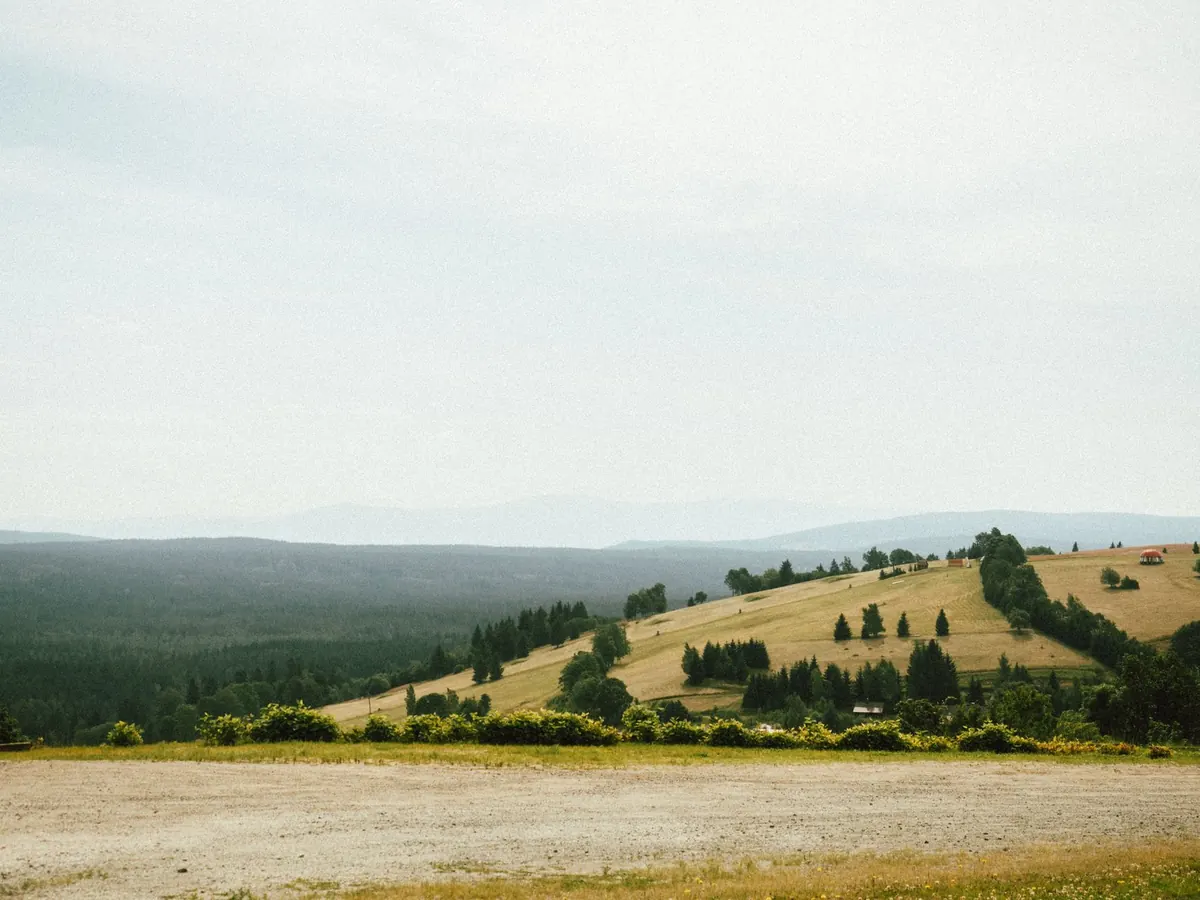
Photo: Jacek Jan Skorupski / Pexels