Gear Guides
Best Kites for Children Aged 5 to 10: A Parent's Buying Guide
The first kite is rarely the one smiling on the box. It is the one that lifts off in an ordinary park breeze, shrugs off a nose-dive into wet grass and can be relaunched by a seven-year-old without an adult sprinting across the field. Buying well at this age has little to do with colour and everything to do with wind range, line handling and how the thing is put together.
What follows is a straightforward look at kite types for children aged five to ten, what each one asks of the child and the adult, and where your money is best spent. Every suggestion assumes a grown-up is standing nearby, because at this age that is not optional.
Four things that matter more than the design
Walk into a toy shop and you will see dozens of kites that look brilliant and fly badly. Before you look at anything else, weigh these four points:
- Safety. No sharp fittings, no long loose tails that tangle around legs, and a line your child can hold comfortably without wrapping it around fingers or wrists.
- Ease of launch. A kite that needs a strong gust will spend most of its life in the car boot. One that flies in a light, steady breeze gets used every weekend.
- Durability. Children crash kites constantly. Sewn seams, replaceable spars and a proper storage bag matter far more than a glossy print.
- Price against lifespan. A cheap kite that breaks on the second outing is the expensive option. A mid-priced one that lasts three summers is the bargain.
If you only compare one feature, compare launch ease. Everything else follows from a kite that actually gets airborne.
Why the single-line delta is the best first kite
For most five- to ten-year-olds, a small single-line delta is the sensible starting point. Deltas have a swept-back wing and a central keel that keeps them pointing into the wind, so they tend to right themselves after a wobble. Most fly in a light breeze, pack down small, and can be launched by a child holding the line while an adult walks the kite back twenty or thirty paces.
Look for a wingspan of roughly a metre or a little more for a younger child — big enough to fly in gentle wind, small enough that the pull never frightens them. Long ribbon tails look lovely but add drag; a short tail or none at all is easier to manage.
Diamond kites: charming but fussier
The classic diamond is the kite most parents picture, and it works well in a steady breeze. In gusty or stronger wind, though, diamonds tend to spin and loop, and the long tail that keeps them stable is also the part most likely to wrap around a sibling. Fine as a second kite, less ideal as a first.
Soft and parafoil kites: no frame, no bruises
Frameless soft kites have no spars to snap or poke, so they are a genuinely good choice for five- and six-year-olds. They collapse harmlessly when they land. The trade-off is pull: a large soft kite in a fresh breeze can tug hard, so choose a small one and keep the wind modest.
Matching the kite to the child
Ages 5 to 7
Small single-line delta or a small soft kite, flown on a light line with a simple winder. Keep sessions short — twenty minutes is plenty — and pick a day with a gentle, steady breeze rather than a gusty one.
Ages 8 to 10
A larger delta, a diamond with a tail, or a small soft kite will all work, and children this age can manage walking the kite out and launching it themselves with a reminder to keep the line clear of other people.
Two-line stunt kites: not a first kite
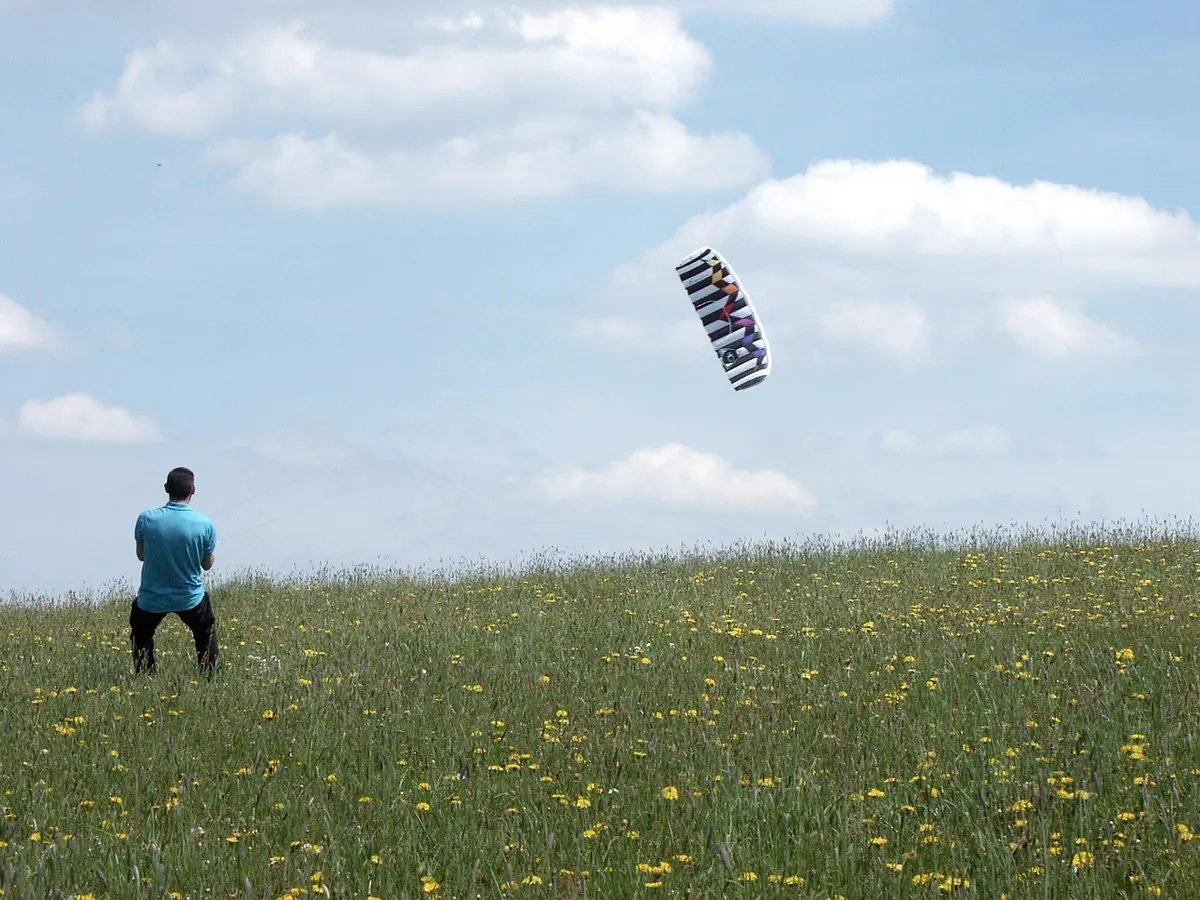
Sport kites are brilliant fun and teach real control, but they need constant input, a decent breeze and a lot of untangling. Most children are ready somewhere around nine or ten, and even then the first few sessions are an adult-led lesson rather than a solo activity.
What good build quality looks like
Frames are usually fibreglass, carbon or plastic. Fibreglass is a sensible middle ground — lighter than plastic, tougher and cheaper than carbon. Plastic frames bend permanently after a few crashes. On the sail, ripstop nylon or polyester outlasts the thin film used on novelty kites by a wide margin.
Check the stitching at the tips and the keel, look for a spar you can actually replace, and see whether the line comes on a winder with a swivel to reduce twisting. Dyneema and similar low-stretch lines are worth having on anything bigger than a child's first kite; ordinary string stretches and snaps.
Launching and flying without tears
- Stand with your back to the wind and hold the kite up by its keel. If it will not sit steady in the air, the wind is too light or too strong.
- Walk the kite out while your child holds the line, keeping a little slack rather than pulling it tight.
- Let go and let the breeze take it. A gentle tug, not a run, is usually enough.
- Have your child walk backwards slowly to keep tension, rather than reeling in fast.
- To land, walk towards the kite so it sinks rather than diving into the ground.
- Tangle first, always. Sort the line out on the grass before flying again.
A kite that flies easily in a light breeze will get used twenty times. A kite that needs a gale will live in the shed.
Safety around people, roads and power lines
- Never fly near overhead power lines, pylons or railway lines, and keep well away from roads and car parks.
- Choose open ground with room for the full line length and no passers-by underneath.
- Stay clear of other people, dogs and picnic blankets — a diving kite is hard to steer.
- Do not wrap line around hands or wrists, and stop flying if a storm is approaching or the line is wet.
- Supervise throughout. Children under ten should not be flying unsupervised in a public space.
What to spend, and what to skip
Skip the seaside souvenir kites with plastic frames and printed film. They are hard to launch and rarely survive a weekend. Spending a little more on a properly sewn kite with a replaceable frame and a decent line will cost less over two or three years, especially if you have more than one child who will use it.
Worth adding at the till: a spare spar set, a second line with a swivel, and a bag that keeps everything together. A second, smaller kite for a sibling heads off most arguments before they start.
Getting the first flight right
Aim for a dry, breezy afternoon with a steady wind rather than a blustery one, and pick a field with no trees at the edges to break it up. Take a drink, expect to untangle something, and plan for a short session. The goal of the first outing is not altitude; it is a child who wants to go again next weekend.
Once your child can launch, hold and land a single-line delta on their own, they have the basics that make a stunt kite or a bigger delta fun rather than frustrating. That is the moment the hobby starts, and it usually happens somewhere in the middle of this age range.
Photo: Anestiev / Pixabay